
The Anchor: The Defensive Defenseman
Updated: Sep 16
The Anchor: Stability, calm, and reliability. You are predictable with defensive reads, net-front control, and poised decision-making. Your value is built on being strong in battles and shutting down the opponent's best players.
The Defensive Defenseman
The Anchor is the backbone of any serious hockey team. You are the defensive conscience, the player the coach trusts to neutralize the opposition's best line, stabilize the game in critical moments, and ensure the puck moves predictably toward the offense. Your role isn't about flash, it's about trust and consistency.
The Defensive Defenseman Value Proposition
When a scout is watching a defensive defenseman, they are looking for the most trustworthy and reliable player on the ice. They want someone who keeps their cool in chaos, wins battles in front of the net, and erases mistakes before they turn into scoring chances. The Anchor is the defender a coach puts out when the game is tight, the puck is dangerous, and the team needs someone who will not break under pressure.
The Defensive Defenseman Mentality
Your mindset is always team first. You possess an athletic posture and command the defensive zone. You communicate with your stick, your words, and your positive body language (e.g., encouraging a teammate instead of showing frustration).
Habits of the The Defensive Defenseman
Defensive Zone
Scouts evaluate the defensive defenseman by looking for precise, defensive habits across all three zones.
Awareness and Positioning: You play exceptionally well without the puck, constantly setting yourself up in great defensive positioning. You're always on the defensive side and are never caught puck watching or out of position at the net front.
Decisive Pressure: You skate hard into corners, pressuring the puck carrier using your stick and your body to kill plays.
Box Outs and Lanes: You are great on your box outs, keeping your stick in the lanes, and using it with purpose to drive pucks up the wall, making you predictable to teammates.
Compete Level: You are super competitive, blocking shots 100% of the time, and willing to be in the shooting lane when needed.
Neutral Zone
Shutting Down Speed: If the puck comes down outside the dots, you shut down the wide speed.
Problem Solving over Speed: You depend on your brain and problem solving skills to take the most efficient route to the puck. You use great body positioning on the defensive side.
Next Play Oriented: After making a great defensive play, you are always thinking one step ahead of the opponent, transitioning quickly.
Offensive Zone
Puck Security: You make smart, simple decisions with the puck. You don't mishandle pucks or get shots blocked on the offensive blue line, preventing breakaways.
Smart Reads: You absorb the rush or pinch based on a clear relationship with the high forward (F3).
Effective, Not Fancy: You make a strong, steady, consistent play, prioritizing efficiency over trying to make the perfect play. You set teammates up for success by giving them a great first pass, allowing them more time and space.
Development for The Defensive Defenseman
On Ice Development
The Defensive Defenseman reliability is tested in situations that demand high pressure decision making:
Penalty Kill (PK): In a four on three scenario, you become more noticeable. You're hard to play against, strong, and use a high level of compete and good sticks to force opponents to make decisions faster.
Offensive Power Play: If on the power play, you are unnoticeable, a good sign. You move the puck quickly, keeping it simple, and under handling it to distribute to skilled players.
Rush Defense (2v1, 3v2): You make the correct read every time, taking away the passing lane, keeping the puck carrier to the outside, and ensuring great defensive side positioning.
Box Out Drills: Focus on winning loose puck races behind the net and ensuring you own that part of the ice at the net front.
Off Ice Focus
Your off ice focus is on strength, stability, and energy conservation, as you eat up a lot of minutes.
Lower Body: Focus on stability, explosiveness, and power in your legs and core. Include lunges, squats, and rotation.
Movement: Focus on being efficient and effective rather than quick and agile. Train backward to forward movements and transitions to maintain optimal power while conserving energy.
Injury Prevention: Due to heavy minutes, prioritize hip mobility and injury prevention in your hips, groins, ankles, and knees to ensure longevity throughout the season.
Warning Signs for the Defensive Defenseman
When the Defensive Defenseman Isn't Ready
A scout knows the Anchor isn't ready for the next level if they see inconsistency.
Snowballing Mistakes: Having one good shift followed by one or two mistakes that lead to frustration on the bench.
Panic and Bad Reads: Getting pressured and rushing decisions, turning into the forechecker, or panic rimming the puck.
Losing Battles: Consistently losing battles in the corner or at the net front.
Bad Offensive Habits: Making bad pinches, getting shots blocked, or making bad reads on the offensive blue line.
NHL Examples for The Defensive Defenseman
The Benchmark
These players represent the current standard for this trusted role.

Jacob Slavin: Mobile, efficient, great foundation of skating, and an all around shutdown defenseman who kills plays without taking penalties.

Jonas Brodin: Excellent footwork in the neutral zone, denies space, and is a high level defender who is consistently solid in the defensive zone.
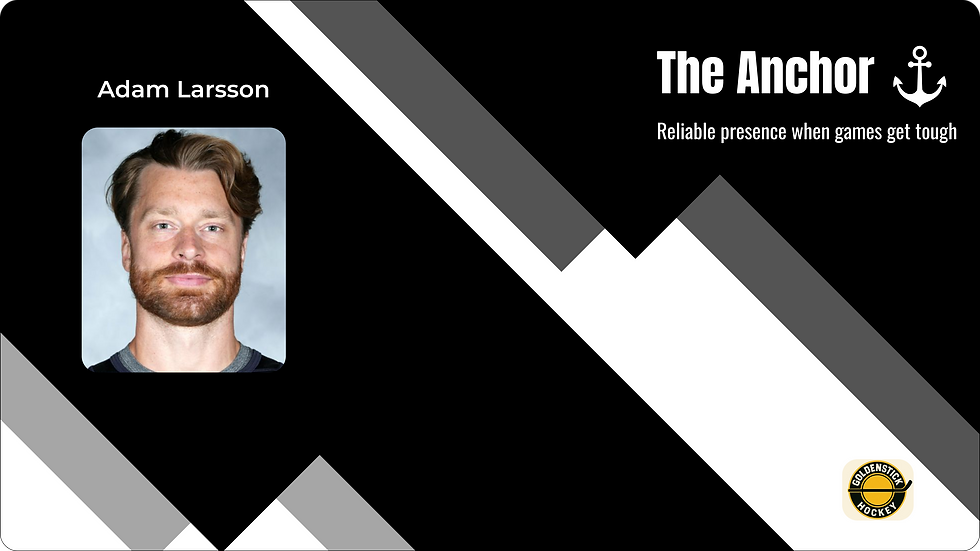
Adam Larsson: Hard to play against, eats minutes, is heavy, and constantly plays from the inside out with a super high compete level.
Your identity isn't just a label, it's the blueprint for your career; use it to filter every training decision and investment you make.
"Forge your identity. Direct your training. Achieve your highest potential."
The Defensive Defenseman DNA
The Anchor is trusted when the game hangs in the balance. You steady momentum by making the right read, winning the battle, and killing the play before it becomes danger. You show calm in chaos and consistency shift after shift. Your team depends on you because you never break. Every rep should reinforce that reliability. Own the defensive side, own the next battle, and own the moment the game needs you most.
"Find who you are. Train who you are. Become who you're meant to be."
This role is one part of a larger identity system. Discover the full set of player archetypes in our main Archetypes Guide.
Continue learning with our full collection of guides inside the Knowledge Hub.


Comments